World Geography - Quiz Game
- 4.7
- Rating
- 10.00M
- Installs
- Free
- Price
 Analysis by App-foxy
I enjoy trivia games that teach something useful without feeling like a lesson, and World Geography - Quiz Game fits that mood well. It turns countries, maps, flags, capitals, population facts, and related knowledge into short quiz sessions that are easy to start when I have a few spare minutes. I would describe it as a broad world geography game rather than a deep strategy title: the pleasure comes from recognizing places, correcting gaps in my memory, and gradually becoming quicker and more confident.
The game is made by Atom Games Ent. and is free to download, with optional in-app purchases ranging from $0.99 to $19.99 per item. It is rated for Everyone, so it is suitable for family use, classroom-style revision, or casual solo play. Its average rating is 4.7 from around 213 thousand ratings, and it has passed 10 million installs, which gives me a good indication that the format has connected with a large audience. Still, popularity alone does not make a trivia game a good fit for everyone, so the important question is how it feels during actual use.
What the first session feels like
My advice to a first-time player is to treat the opening session as a tour rather than a test. The subject is enormous, and nobody is expected to know every capital, flag, or population detail immediately. The useful part of the game is that each question gives me a small target. Instead of trying to memorize the whole world at once, I can notice which kind of question causes trouble and use later rounds to strengthen that area.
You May Also Like

 Blood Strike: 2.5 Anniversary
Blood Strike’s Loadouts Turn Every Drop Into a Tactical Gamble
A close look at Blood Strike’s custom loadouts: how fast access to signature weapons reshapes its battle royale rhythm, rewards preparation, and narrows the gap between fights.

 Pandora - Music & Podcasts
Pandora’s Music Is Easy to Start, but Harder to Recover
Pandora’s strength is its low-effort path from a seed to a station. Its weak spot is how much confidence it asks you to place in connection, setup, and quiet recovery.

 8 Ball Pool
 Is Built on Rivalries, Rematches, and Routine
A close look at the rivalries, rematches, shared routines, and unanswered safety questions that turn a quick pool match into a persistent mobile community.

 Samsung Music
’s Quiet Strength Is Playing What You Already Own
Its reach comes less from spectacle than from dependable access to a personal library. That simplicity is both the app’s strongest retention engine and its ceiling.

 AccuWeather: Weather Radar
AccuWeather Review: A Quick, Clear Forecast for Everyday Decisions
For everyday plans, the best forecast is the one you can understand quickly. AccuWeather makes rain timing, radar, and local conditions easy to act on, with a few trade-offs.

 Hill Climb Racing
Why Hill Climb Racing Still Turns Crashes Into One More Run
A tiny car, a bumpy hill and one more upgrade: Hill Climb Racing keeps resurfacing because its simple chaos makes every near-miss feel personal.
More From Our News Desk
View All News


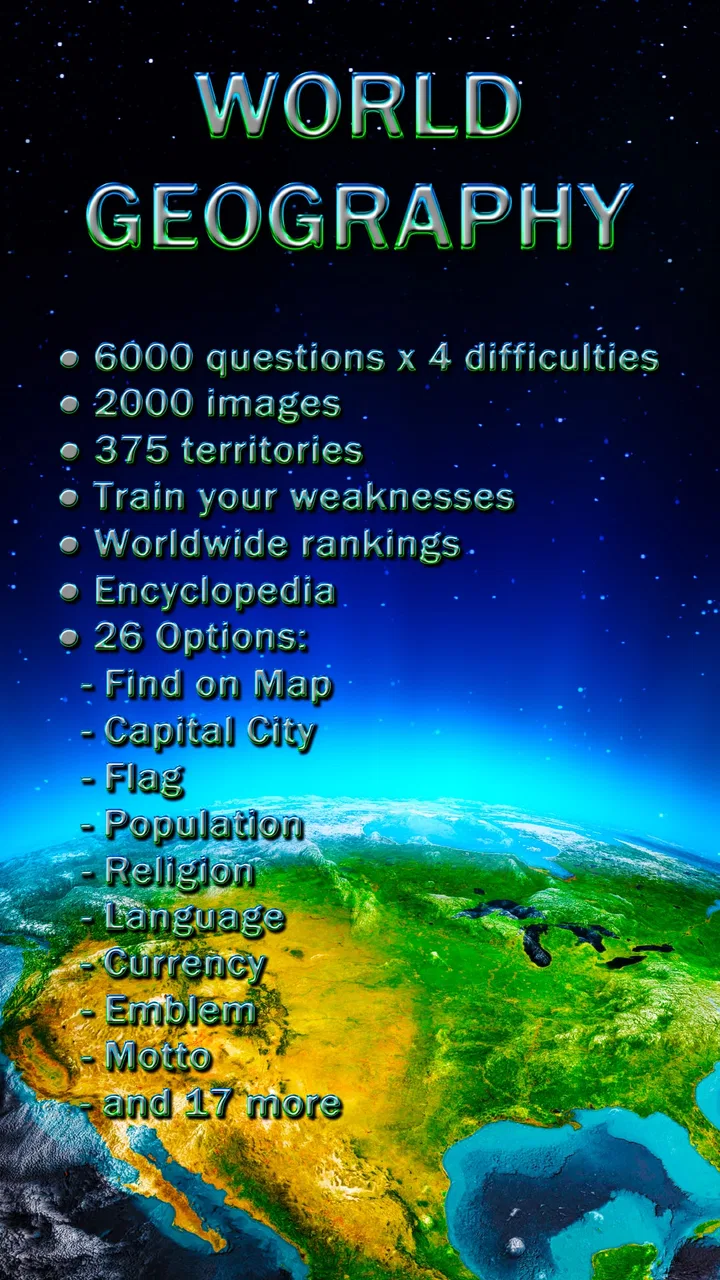
The range of subjects keeps the experience from becoming a single repetitive flag quiz. One round may make me identify a country by its flag, while another asks me to connect a place with its capital or recognize information about population. That variety matters because geography is easier to remember when I link several clues together. A flag becomes more meaningful when I also remember its country’s location, capital, or neighboring region.
The short-session design is especially convenient. I can play while waiting for an appointment, take a few questions during a break, or use it as a relaxed evening activity without committing to a long campaign. It also works well as a conversation starter: two people can compare answers, challenge one another, and discover that familiar-looking flags are often harder than expected.
There is a difference between this and a map reference tool. A reference app is better when I need to search for one exact border or location. Here, I am expected to recall information under quiz conditions. That makes it more engaging for practice, but less suitable when my only goal is to look something up quickly.
Choosing a sensible starting point
When I begin, I try not to chase the most difficult material immediately. A better approach is to answer enough introductory questions to identify my natural strengths. If flags feel easy but capitals are difficult, I can use that distinction to guide my attention. The strongest learning comes from noticing patterns in mistakes, not from rushing through questions simply to finish a session.
I also recommend reading each question carefully before looking at the answer choices. Geography questions often include similar names, neighboring countries, or flags with related colors. A quick guess may feel efficient, but slowing down for a moment helps me separate what I genuinely know from what merely looks familiar.
For a child or younger player, the game can be used in short supervised sessions. The Everyone rating makes the subject approachable, but the amount of information can still feel demanding. I would encourage a child to focus on one theme at a time and discuss wrong answers afterward instead of treating every miss as a failure. That turns the game into a learning activity rather than a simple score chase.
Setting it up without overthinking it
The basic setup is uncomplicated: install the game, open it, and begin exploring its geography quizzes. The current version is 1.2.184, and it supports devices running Android 4.0 or later. That broad compatibility is useful if I am using an older phone or tablet rather than a recent flagship device. I would still keep the first session relaxed, because the main decision is not technical; it is deciding which part of geography I want to practice first.
Because the game is free, I can try its central experience before deciding whether any optional purchase is worthwhile. This is an important advantage for families and occasional players. I do not need to commit money before finding out whether the question style suits me. The optional purchases may appeal to someone who wants to support the game or access extras, but I would not treat them as a reason to install it. The free starting point is the sensible way to evaluate it.
One practical habit helps me get more from the setup: I keep a small note of questions I repeatedly miss. I do not write down every answer. I record only the stubborn ones, such as a capital I confuse with another city or a flag I recognize only because it resembles a neighbor’s. After a few sessions, that list becomes a personal revision guide. It is more useful than trying to memorize a random collection of countries.
I also avoid playing while distracted by notifications or conversation. A geography quiz depends on attention to visual details and wording. If I am answering half-heartedly, I may remember the frustration but not the information. A quiet few minutes produces better learning than a longer session in which I am constantly switching between tasks.
How to turn the first correct answer into progress
The first meaningful success is not simply getting one question right. For me, it happens when I can explain why the answer is right. If I identify a flag, I try to connect it with the country’s region. If I answer a capital question, I repeat the country and capital together. That extra mental link makes the result more durable and prevents the game from becoming a series of disconnected guesses.
A useful routine is to pause briefly after a difficult answer. I ask myself whether I knew it, recognized it, or guessed it. Those are three different levels of knowledge. A recognized answer may become reliable with another encounter, while a lucky guess needs more attention. This small distinction helps me decide where to spend time instead of assuming that every correct response represents equal progress.
When playing with a friend, I prefer explaining answers rather than competing only for speed. One person can describe the clue that led to an answer, while the other checks whether the reasoning makes sense. This works particularly well with flags and capitals because it exposes false confidence. Someone may know a country’s flag but have no idea where it is located, or know a capital’s name without connecting it to the correct country.
For school revision, I would use the game as a warm-up or review tool, not as the only source of study. It is good at prompting recall, but a quiz cannot replace a detailed atlas, teacher explanation, or map exercise. The best workflow is to use a missed question as a reason to inspect the region elsewhere, then return to the game later to see whether the connection has improved.
Where new players can become confused
The biggest source of confusion is the difference between visual recognition and actual geographic knowledge. A flag can look familiar because several countries use related colors or layouts. A capital can sound familiar because names recur across regions. When I get one wrong, I try to treat the answer choices as clues rather than evidence that I am bad at geography. The game becomes much more rewarding once mistakes are used to build comparisons.
Population questions require another kind of caution. Population changes over time, and a quiz answer is best understood as a broad fact within the game’s information set rather than a permanent number to quote forever. I focus on the relative idea: which country is more populous, which one is smaller, and how the countries compare. That keeps the question useful without turning a trivia session into a debate over changing figures.
Another possible frustration is uneven confidence between categories. I may perform well on flags and feel lost on capitals, or recognize large countries while struggling with smaller ones. That unevenness is normal. It is also one of the game’s strengths, because the variety reveals gaps that a narrower quiz would hide. I would rather discover those gaps in a low-pressure game than assume I understand world geography because I can identify a few famous flags.
There is also a trade-off between speed and accuracy. Fast answers feel satisfying, but speed can encourage me to choose the first familiar option. If I am playing for learning, I slow down. If I am playing for a quick challenge with friends, I accept that some mistakes will come from haste. Knowing which goal I have before starting prevents me from judging the game unfairly.
Players who want a fully open-ended geography experience may find the quiz format limiting. The game guides me toward its questions instead of letting me freely explore every border, city, and physical feature. That is not a defect for someone who wants structured recall, but it does mean that a dedicated map app or atlas is a better companion for detailed exploration.
Who will get the most from it
I think it is a strong match for curious beginners, students reviewing basic geography, families looking for an educational pastime, and adults who enjoy testing general knowledge. It is also useful for travelers who want to become more familiar with countries before a trip, although I would combine it with practical map research rather than relying on trivia alone.
It is less suitable for someone seeking an action game, a narrative adventure, or a competitive multiplayer experience built around live opponents. The appeal is quiet concentration and gradual improvement. If answering questions about flags, capitals, and country facts sounds like homework rather than entertainment, the broad subject matter may feel repetitive even though the categories vary.
I would also hesitate to recommend it as the only tool for advanced geography students. A serious learner may want detailed maps, regional explanations, historical context, and precise reference material. This game can reinforce recall, but its role is closer to practice than to a complete course. That distinction is important: it is most valuable when placed alongside other ways of learning.
How I would use it in everyday life
Imagine that I have ten minutes before a train arrives. I open the game and play a short set of questions, paying attention to the ones I hesitate over. Instead of immediately starting another round, I choose one missed country and mentally connect its name, flag, capital, and location. Later that evening, I return for another session and see whether the answer feels familiar. That simple two-stage routine turns spare time into repeated exposure without requiring a formal study plan.
At home, I might use it with a child by making each question a conversation. After an answer, we can ask what continent the country is in, which nearby countries we know, or why a flag might be easy to confuse with another. The quiz supplies the prompt, while the discussion adds context. This is where the game becomes more than a sequence of taps.
For a group of friends, I would keep the sessions short and rotate who answers first. People often know different areas: one person may remember capitals, another may recognize flags, and another may be better with population comparisons. That variety makes the game more social without requiring a formal tournament system. I would avoid turning every round into a high-stakes contest, because the educational value is stronger when players explain their reasoning.
My most effective personal workflow is to separate discovery from review. During the first pass, I answer naturally and accept mistakes. During the second pass, I focus on recurring weak spots. During the third, I try to answer without relying on the visual familiarity that helped me before. This approach makes the game feel less like random trivia and more like a compact memory exercise.
What makes it different from ordinary alternatives
Compared with a static atlas, this game gives me an immediate reason to recall information. Compared with a simple flashcard deck, it offers a wider mixture of flags, capitals, maps, and country-related facts, so I am not always practicing the same association. Compared with a search engine, it is less efficient for finding one fact but much better at exposing what I cannot remember without prompting.
Those differences also show where alternatives win. A map application is preferable when I want to trace borders or understand spatial relationships. A reference site is better when I need current, detailed information. A structured course is better when I want explanations and progression designed by a teacher. I choose this game when I want a low-friction way to test recall and keep geography in my routine.
The broad subject coverage is its most useful quality, but it can also make the experience feel less specialized. Someone focused only on flags might prefer a dedicated flag trainer. Someone interested mainly in capitals could want a narrower tool with more repetition in that area. I appreciate the variety, yet I would not pretend that one general quiz can replace a focused study resource.
My recommendation after spending time with it
World Geography - Quiz Game is an approachable way to make geography practice feel lighter. I like that I can begin for free, play in short bursts, and move between several kinds of questions instead of repeating one narrow format. The game’s Everyone rating also makes it easy to imagine using it with children or relatives, provided the session stays encouraging rather than competitive.
Its limitations are mainly about purpose. It is not a complete atlas, a detailed reference library, or a substitute for serious study. Some questions will expose the same weak spots repeatedly, and players who dislike recall-based quizzes may find the format tiring. Optional in-app purchases are available, so anyone trying to keep the experience entirely free should simply evaluate the basic version before spending anything.
For a first-time user, I would start with a relaxed session, identify one category that feels difficult, and return to that weakness later instead of trying to master everything immediately. Keep a short list of recurring mistakes, explain correct answers aloud when possible, and use a map or reference source when a question sparks deeper curiosity. Those habits make the game more useful than simply chasing a higher score.
Atom Games Ent. has created a straightforward trivia experience that works best as a regular habit rather than a one-time challenge. With a 4.7 average and more than four thousand written reviews, it clearly has a substantial audience, but my recommendation is based on the practical experience: if you want an easy entry into learning geography through quizzes, this is a friendly place to begin. If you want detailed exploration, current reference information, or advanced instruction, pair it with a more specialized alternative.
Overall, I would recommend it to anyone who enjoys discovering small gaps in their world knowledge and filling them gradually. The first success is easy to reach, the next step is clear, and the game gives me enough variety to keep returning. The best way to enjoy it is to play for understanding, not just for a perfect streak.
FAQs for World Geography - Quiz Game
01What is the main objective of World Geography - Quiz Game?
World Geography - Quiz Game aims to enhance your knowledge about the world's countries, capitals, landmarks, and geographical features through engaging quizzes. It is designed to be educational yet fun, making it ideal for both students and geography enthusiasts who want to test and expand their understanding of the world.
02Is World Geography - Quiz Game suitable for all age groups?
Yes, the game is designed to be accessible for a wide range of age groups. The questions vary in difficulty, allowing both children and adults to enjoy and learn. Parents can use it as an educational tool for their kids, while adults can challenge themselves with more advanced questions.
03Does the game require an internet connection to play?
World Geography - Quiz Game can be played offline, making it convenient for users who want to enjoy the game without an internet connection. However, certain features like leaderboards and updates may require an internet connection to function properly.
04Are there any in-app purchases or ads in World Geography - Quiz Game?
The game offers a free version that includes ads. There are optional in-app purchases available to remove ads and unlock additional content, such as exclusive quizzes and advanced features. This allows users to customize their experience based on their preferences.
05How can I track my progress in the game?
World Geography - Quiz Game includes a progress tracking feature that records your scores and achievements. You can view your performance history and track improvements over time. This feature is helpful for users who want to monitor their learning progress and set personal goals.
Pros
- Engaging and educational gameplay.
- Wide variety of geography topics.
- Simple and intuitive interface.
- Regularly updated content.
- Offline mode available.
Cons
- Ads can be intrusive.
- Limited hints available.
- Some questions are repetitive.
- In-app purchases can be costly.
- No multiplayer mode.

World Geography - Quiz Game
Gallery